Best Programming Languages for Mobile App Development
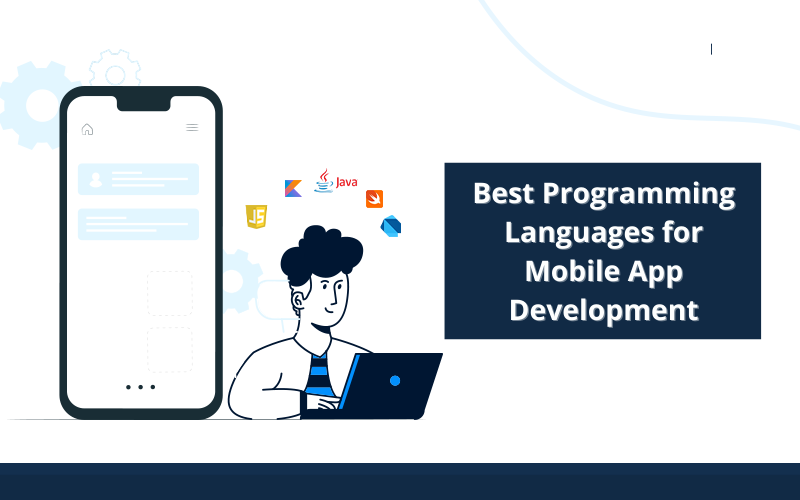
Did you know there are 2.2+ million apps in the Google Play and App Store? And that number is only increasing as mobile app development is continuously becoming more popular. So, if you’re looking to create your own mobile app, it’s important to choose the right programming language. In this blog, we will take a look at some of the highly popular programming languages that help create the best mobile apps.
Top 7 Languages for Mobile App Development
Mobile app development is one of the hottest areas in programming right now. There are a variety of different languages that can be used to develop mobile apps, but some are better suited than others. Here are seven of the top programming languages for creating mobile apps:
Java
Java is one among the most preferred programming languages which is why experts worldwide use it for developing mobile apps. It is relatively easy to learn, and it has a large community of developers who can offer support and guidance. In addition, there are a number of powerful Java-based development tools available, making it a great choice for those looking to get started in mobile app development.
Objective-C
Objective-C is the language of choice for many experienced hire iOS developers. It is a powerful and versatile language that enables developers to create highly responsive and fluid apps. However, it might be a challenging task to learn especially for beginners, and its syntax can be confusing. Nevertheless, it still stays a popular choice for people looking to create high-quality iOS apps.
Swift
Swift is an intuitive and powerful programming language for macOS as well as iOS development. It's easy to learn and use, and it's the ideal language for developing mobile apps. Swift has been designed from the ground up to be fast and efficient, and it's able to take advantage of the latest advances in compiler technology. Thanks to its great tool support, Swift is an excellent choice for developing high-quality mobile apps.
React Native
React Native, a language for cross-platform development, enables developers to create native mobile apps using JavaScript. React Native apps are built using the same core UI building blocks as regular iOS and Android apps, but they use native components instead of web components. This makes React Native apps look and feel more like native apps, even though they're built using different technologies. Moreover, React Native has a huge community of developers. It means there are numerous resources available for learning how to use the language.
Xamarin
Xamarin is a cross-platform development tool that can be used to develop apps for both iOS and Android devices. One of the biggest advantages of using Xamarin is that it allows developers to share code between platforms, which can save a lot of time and effort during the development process. Additionally, Xamarin comes with a built-in user interface (UI) designer that can be used to create beautiful and user-friendly app interfaces.
Ionic
Ionic is a popular open-source framework for building mobile apps. It is based on AngularJS and Apache Cordova, and it uses HTML5, CSS, and JavaScript to create native app experiences. Ionic provides tools and services for developing, testing, and deploying mobile apps. It also offers a third-party plugin ecosystem. Ionic is a good choice for developers who want to build cross-platform apps or those who want to use web technologies for app development.
Kotlin
Kotlin has been gaining popularity as a programming language for mobile app development, and it's not hard to see why. Kotlin is a concise, expressive, and powerful language that can help you build robust Android apps quickly and efficiently. In addition, Kotlin is fully compatible with Java, so you can easily integrate it into your existing development workflow. If you're looking for a language that will help you get the most out of your Android development, Kotlin is a great option. Get an idea to develop a app for kotlin hire a best android app development company.
So, these are some top programming languages to use for developing mobile apps. If you’re looking for a top Mobile App Development Company in New York that can help you bring your app idea to life, be sure to get in touch with us. We have years of experience in developing both iOS and Android apps, and we would love to work with you on your next project. What language are you planning on using for your mobile app development?


Fantastic job! You’ve broken down a complicated topic into clear, actionable points. This is incredibly helpful—looking forward to more of your insights!
ReplyDeletefantasy sports app development services
Great article! This post provides valuable insights into the best programming languages and frameworks for modern mobile app development. Choosing the right technology plays a crucial role in building scalable, user-friendly, and high-performing applications. Businesses looking to create innovative mobile solutions can leverage React Native app development services for efficient cross-platform app development. Similarly, Flutter app development services help businesses build fast and visually engaging applications. Professional mobile app development services can further ensure a seamless user experience and robust app performance. Thanks for sharing such an informative and helpful article!
ReplyDeleteWorth adding that the language you write the app in often has little to do with the language the model side is written in. Most of that work happens in Python regardless of whether the client is Swift, Kotlin or Dart, so firms offering AI Development Services are usually working in a different stack from the app team on the same project. The exception is anything running on device, where Computer Vision Services mean converted models called from native code and the platform language matters again. Useful to know when planning a team, since companies looking to Hire AI Developer talent are rarely hiring for the same language the app is built in.
ReplyDeleteLanguage choice on mobile is as much a hiring decision as a technical one, since the pool available locally often decides what a team can actually maintain. That is why JavaScript keeps winning arguments it should lose on merit, and why teams that Hire MERN Stack Developers can move people between the app and the web work as priorities shift. The same logic puts Next.js Development Companies on projects where the team already writes JavaScript rather than adding another language for the web surface. Backend and model work stay outside that calculation entirely, with Python Development Companies and AI Integration Companies hiring for a different pool altogether.
ReplyDelete